




Introduction
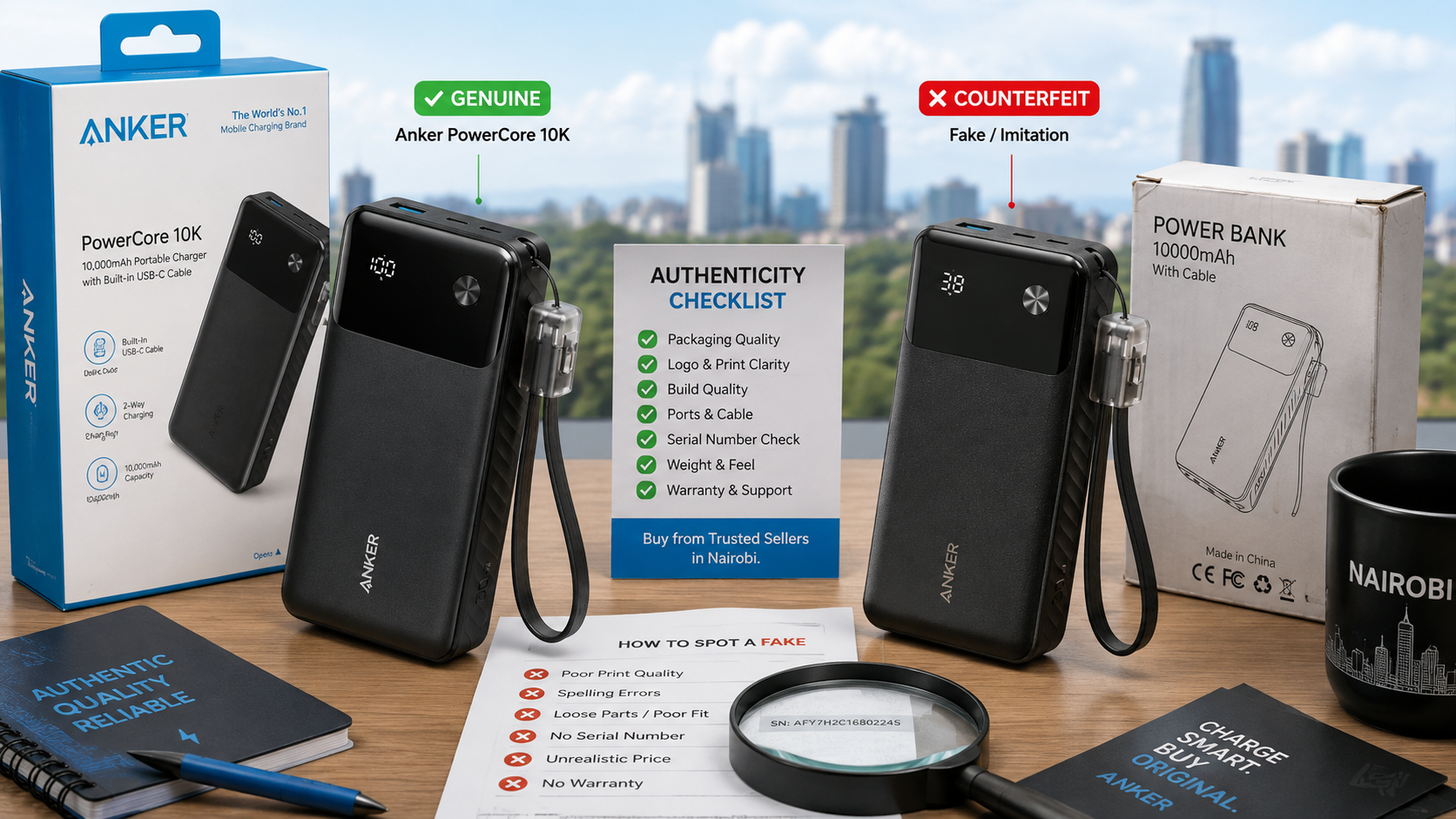
Counterfeit chargers are one of the most common risks in Kenya's informal electronics market, and beyond wasted money, poor-quality fakes can genuinely damage your phone's battery. Here's how to tell the difference before you buy.
Step 1: Check the Packaging Print Quality
Genuine Anker packaging uses sharp, consistent typography and a matte finish. Counterfeits often show slightly blurred logos, inconsistent color saturation, or a glossier box finish than the original.
Step 2: Verify the Serial Number
Every genuine Anker product includes a scratch-off serial code that can be verified directly on Anker's official website or app. If a seller refuses to let you scratch and check this code before purchase, treat it as a red flag.
Step 3: Weigh the Product
Counterfeit power banks and chargers frequently use cheaper, lighter internal components. A genuine Anker 20,000mAh power bank has a specific, consistent weight — noticeably lighter fakes are a common giveaway.
Step 4: Check the Cable Connector
Genuine USB-C and Lightning connectors from Anker have precise, snug-fitting machining. Loose-fitting or wobbly connectors are a strong indicator of a counterfeit, and mismatched connectors can potentially damage your device's charging port over time.
Step 5: Buy From Verified Retailers
The safest approach remains buying from Anker's authorized Kenyan distributors or established electronics retailers with return policies, rather than street vendors along Luthuli Avenue or unverified online marketplace listings.
